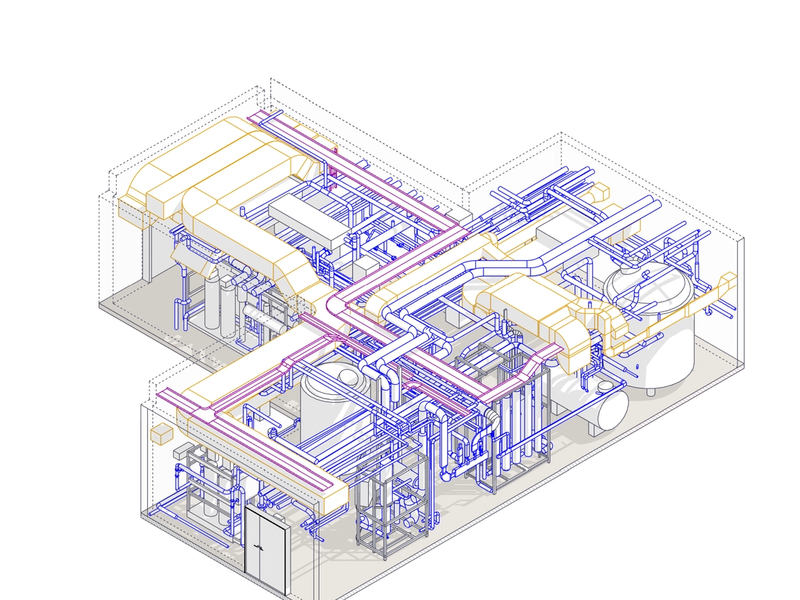
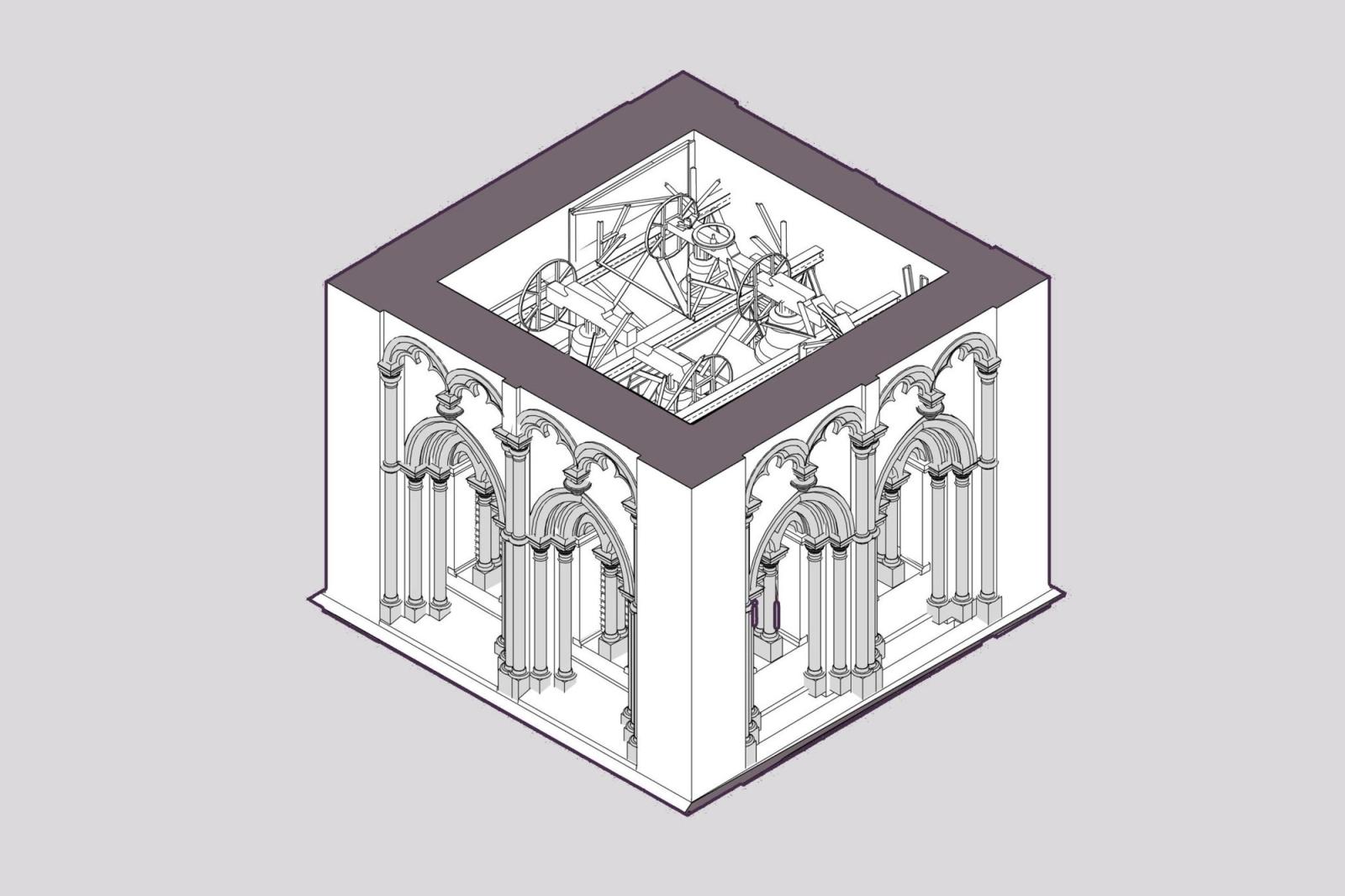
A client urgently needed to close a project stage on a heritage building. What they had instead of a working model was a Revit file the previous team had driven close to a write-off.
Taking over someone else's file always carries risk. This one was a special case.
What we found
We opened the model and found half the geometry built with Model-in-Place.
There was no parametric data and no sensible categorisation. You could not pull accurate material quantities out of it, and not a single schedule could be trusted. The client had paid for BIM and received a dead 3D picture: something that looked like a model from the outside, but could not perform any of the functions a model exists for.
When Model-in-Place is the right call, and when it is not
Model-in-Place is a legitimate tool. We have used it deliberately ourselves on heritage work, where unique geometry refuses to fit a parametric family and matching the scan matters more than automation.
The difference is why it gets used. Choosing it for a one-off node that has to follow real curvature is a judgment call, and the element still carries its data and sits in the right category. Reaching for it to patch a hole and avoid the harder work of proper BIM is something else. That is what had happened here, and the giveaway was not the geometry. It was that the elements carried no information at all.
The rescue
The deadline was burning, so we did not attempt to rebuild everything at once. We started with the most critical zones.
Dead elements were swapped for fully informative families, and the data structure was rebuilt from scratch in parallel. Once the elements carried real data and sat in the right categories, the schedules finally calculated correctly. The client closed the stage on time, with no financial losses.
The lesson
A model that looks finished and a model you can keep working with are two different deliverables. From the outside, they can be hard to tell apart, which is exactly the problem. The gap only shows up when someone tries to pull a quantity, trust a schedule, or hand the model to the next team, and by then the stage deadline is usually close.
Spotting that difference at the start is far cheaper than discovering it at stage handover. If you are not certain what you have been given, an independent audit answers the question early rather than at the worst possible moment.
If you have inherited a model you do not trust, or need one rebuilt properly with families and data that actually work, tell us what you are dealing with.