In most companies, documentation either slows the work down or speeds it up, and which one usually comes down to whether anyone can find the right document when they need it. We put the effort into making ours findable.
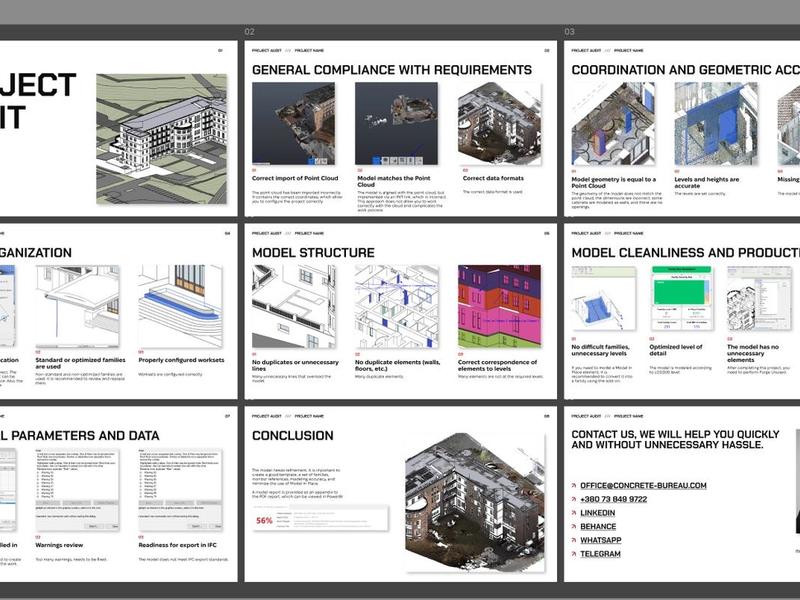
Over the past few years, we have built a shared logic for how projects run, and we document each new process as it appears. That might be a presentation, a checklist, a set of best practices, or a manual. The point is that every person can see how we actually work and repeat the approach, instead of guessing at it or asking around.
Why it matters when someone new joins
The clearest payoff shows up at onboarding. When a new person joins, we are not spending weeks explaining how things are done. The knowledge base already holds it, so they get up to speed quickly and without the usual scramble.
That has a knock-on effect for clients too. A team that onboards fast can take on work without a long ramp, and the standards a new person inherits are the same ones everyone else follows, so the quality does not wobble depending on who picks up the task.
One place for everything
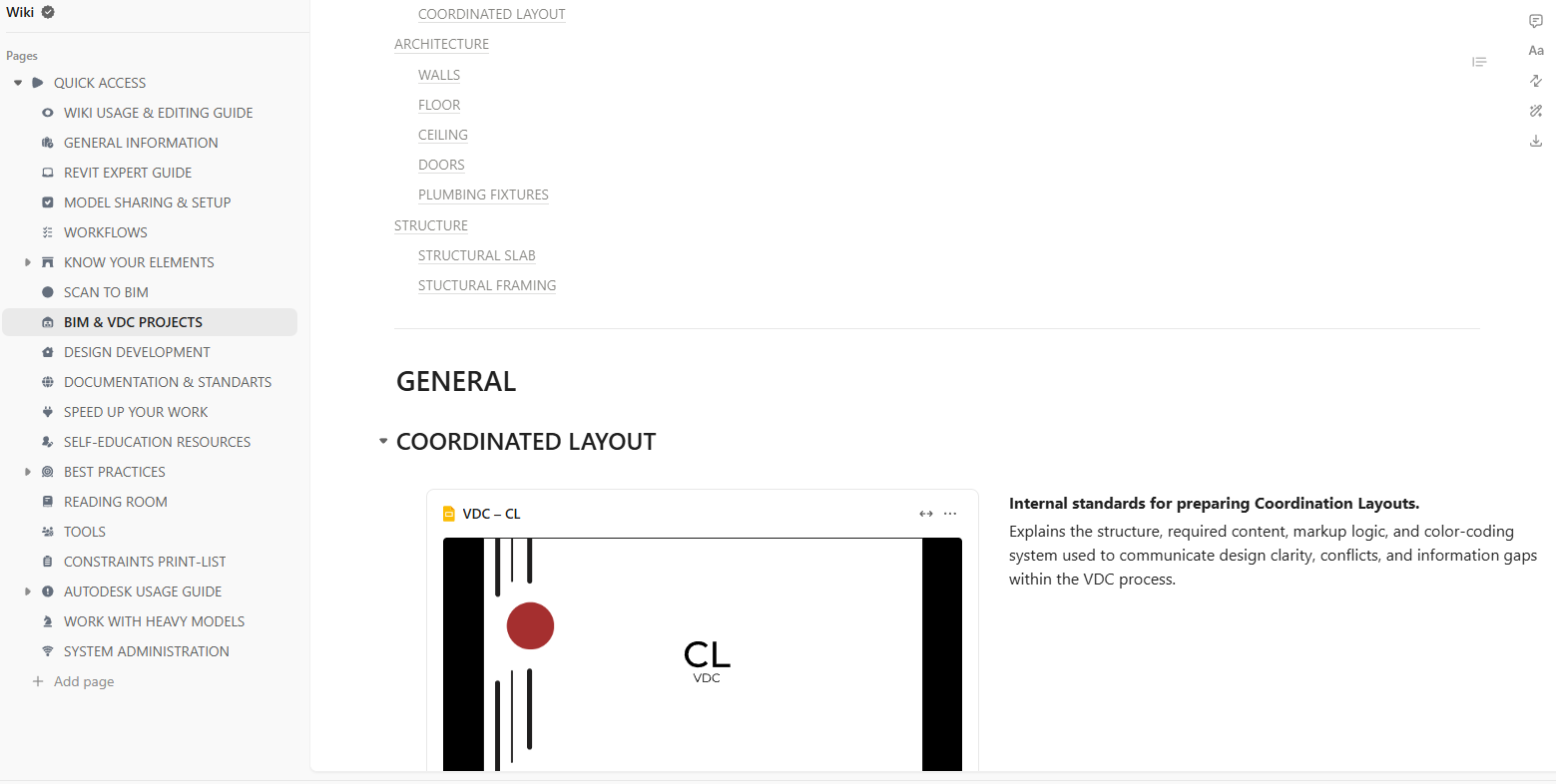
We keep all of this in a single internal space, our WIKI, rather than scattered across drives and chat threads. It covers:
- Software manuals
- Company information
- Our BIM and VDC processes
- Templates and standards
- Training resources
It is a living knowledge base, not a folder that was tidy once and then forgotten. We update and expand it constantly, and the whole team has access. The value of a shared source of truth disappears the moment half of it is out of date, so keeping it current is part of the routine rather than an occasional cleanup.
Adding AI on top
To make the information faster to reach, we connected ClickUp AI into the same space. It can:
- Find the right entry in the WIKI in seconds
- Answer from our own documents rather than from the open internet
- Respond directly inside project chats
- Help draft text and content privately
It has been most useful in two places: digging up past decisions and onboarding new people. Instead of a dozen questions bouncing around Slack, there is one clear answer drawn from our own material. We have tried other tools alongside it, including ChatGPT, Notion AI, and Microsoft Copilot, and they all help on one condition. They have to be pointed at reliable sources. An AI answer is only as trustworthy as the documents behind it, which is the whole reason the WIKI comes first and the AI second.
The honest version
Internal documentation is not paperwork for its own sake. It is the foundation a company needs if it wants to scale without quality slipping, and with AI on top of it, finding what you know becomes quick instead of a hunt. For a client, it is one more reason the team is consistent from one project to the next, whoever happens to be doing the work.
If your own team still loses time searching for information or reinvents the same wheel on every project, it is worth rethinking. And if you would rather work with a BIM partner that already runs this way, tell us what you are working on.