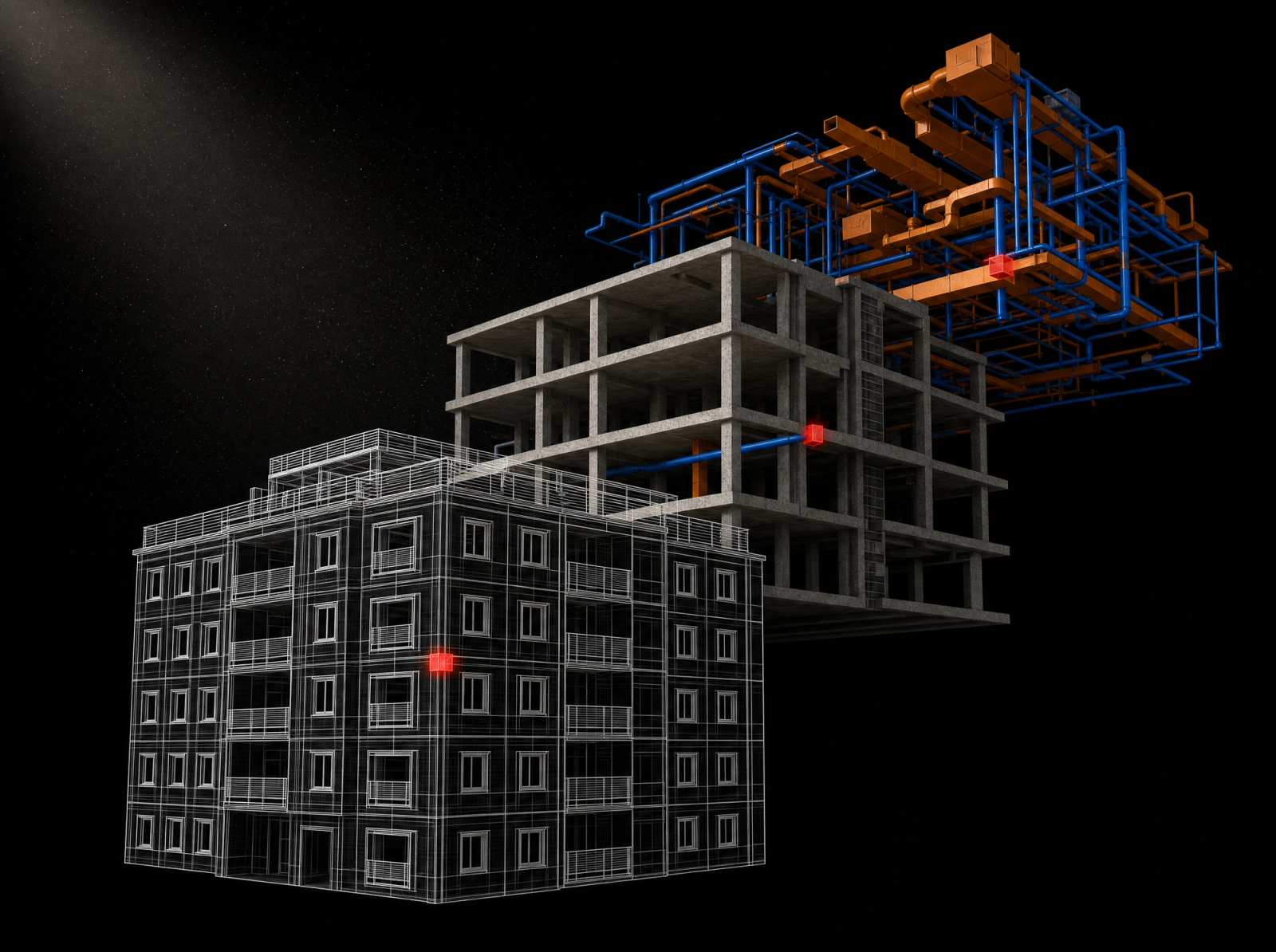
Coordination rarely fails inside the clash report. It fails in the gaps around it: a model accepted without an intake check, a tolerance nobody wrote down, a resolved clash that quietly came back three revisions later.
This checklist closes those gaps. It comes from how we run coordination on live projects, and it is deliberately unglamorous. Thirty concrete points across four phases, with no theory attached.
Download the checklist as a print-ready PDF, or copy the points below straight into your task tracker.
A. Before coordination starts
Agreed once, at kickoff. Every argument you have later is cheaper if it happens here.
- BIM Execution Plan or information standard agreed: ISO 19650, the client's own BEP, or a legacy standard if the project is still running on one
- Common Data Environment set up: who uploads what, where and when
- Shared coordinate system and project base point agreed across disciplines
- Model exchange schedule fixed: who issues updates and on what cycle
- Clash matrix agreed: which discipline pairs get checked against each other
- Tolerance set per discipline pair: zero for structural connections, clearance allowances for insulation and access
- Worksets and naming conventions agreed: by discipline or linked model, never personal scratch space
- LOD confirmed per discipline, matched to what the model is actually for
B. Receiving a model
The intake audit for every model arriving from a contractor or consultant. A model can look correct in a single view and fall apart the moment a second person opens it, and this is where that gets caught.
- File opens clean in the agreed Revit version and all links resolve
- Coordinates verified against the federated model before anything else
- Levels and grids match the reference model
- Worksets organised by discipline or by link
- Elements categorised correctly and carrying data, with Model-in-Place used only where unique geometry justifies it
- Wall joins clean, with Disallow Join used where needed
- No duplicate or overlapping elements
- File size and performance sane: purged, no bloated families, no stray CAD links
- Schedules pull real numbers, spot-checked against the drawings
C. Every coordination cycle
Weekly or per milestone, for as long as the design is moving.
- Current model versions collected from every discipline, with stale versions flagged
- Clash detection run per the agreed matrix, not all against all
- False positives filtered before the report goes out, because a short prioritised list gets acted on and hundreds of raw rows get ignored
- Every clash carries a viewpoint and a structured note in the federated NWD
- Report issued in a shared, trackable format with a named owner per open clash
- Coordination meeting held once per cycle, with decisions made in the room
- Decisions logged with dates in a running project log
- Resolved clashes re-checked in the next run, with nothing closed on trust
- Ripple effects flagged: a change in one discipline checked against every discipline it touches
D. Before handover
The last gate before the model leaves the building.
- Deviation and QA check against the source data, inside the agreed tolerance, with a report
- Second reviewer opens the model, because nothing ships after a single pass
- Deliverables in the agreed formats: RVT, IFC, DWG, plus drawings and quantities where they are in scope
- Model cleaned, archived and retained
How to use it
The four phases run on different clocks. A and D happen once per project. B runs on every incoming model, which on a busy job means several times a week. C repeats for as long as the design keeps moving, and it is the phase that quietly decides whether the other three were worth doing.
The most common failure we see is a team that does A properly at kickoff, then stops enforcing B once the schedule tightens. Intake checks are the first thing dropped under pressure and the most expensive thing to skip, because every problem they would have caught arrives later wearing a bigger price tag.
If you would rather have the whole cycle run for you, that is what our BIM coordination service does: we act as the neutral coordinator between architects, engineers and contractors, holding the federated model and the clash cycle so your team does not have to. Send your models through the contact page and you will have an answer within one working day.